Who Is Responsible for a Shared Drain Blockage?
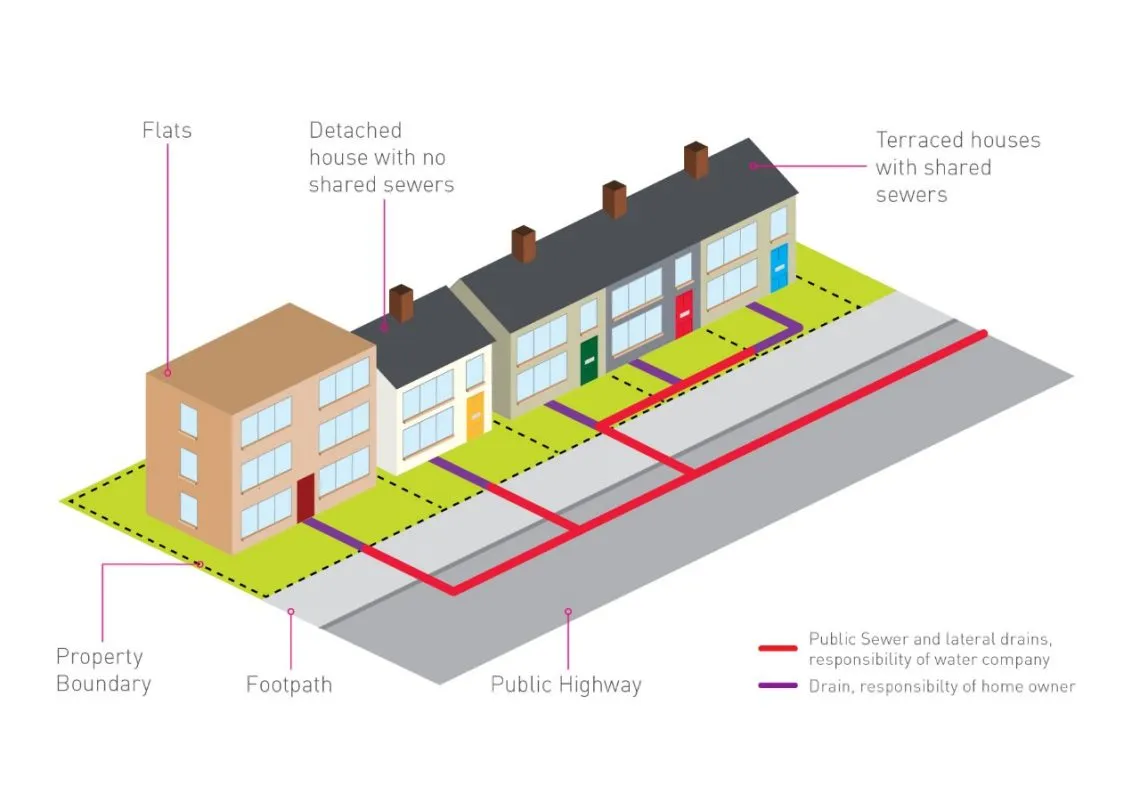
A blocked shared drain can be a stressful and confusing problem. We explain who is legally responsible for clearing it and what you should expect to pay.
When a shared drain becomes blocked, the immediate question is often less about the cause and more about who is responsible for fixing it—and who pays. As drainage engineers, we see this confusion regularly. The responsibility isn't always with the homeowner who first notices the problem, and the costs aren't automatically split. This guide explains the legal framework and the typical costs involved, so you know where you stand.
Understanding Your Drainage System & The Law
First, you need to identify where the blockage is. The drains inside your property boundary, before they connect to a pipe serving another property, are your private responsibility. Once your drain joins with a neighbour's drain, or reaches a pipe that serves multiple properties, it becomes a shared drain, also known as a lateral drain. The law in England and Wales is clear: the repair and maintenance of shared drains, and the public sewers they connect to, are the responsibility of the local water company. This changed in 2011, transferring responsibility from homeowners.
However, the water company's responsibility typically begins at the point where the shared drain connects to the public sewer. The section of shared drain on your land, up to that connection point, is still a shared responsibility between the properties it serves. If a blockage occurs in this shared section, all connected properties are legally responsible for its clearance.
What Happens When You Report a Shared Blockage?
If you suspect a shared drain blockage, you should contact your local water company first. They will usually send an inspector to perform a CCTV survey to locate the exact point of the blockage. If they find the blockage is in the public sewer or at the very point of connection, they will clear it at no direct charge to you (the cost is covered through your water rates).
If their inspection reveals the blockage is in the shared section of drain on private property, they will declare it a 'private blockage' and will not undertake the work. This is when you need a professional drainage company like ours. The water company should provide you with a report or reference number detailing their findings, which is useful for us.
Costs & Arrangements for Clearing a Private Shared Blockage
Once the blockage is confirmed as a private, shared issue, the affected neighbours need to arrange and pay for the clearance. As engineers, we are often appointed by one party to resolve the problem. The cost for clearing a shared drain blockage depends entirely on the access, method required (e.g., high-pressure water jetting, manual excavation), and the severity of the blockage.
We provide an upfront, itemised quote after an assessment. There is no standard price, but we always explain the cost clearly before any work begins. The fairest approach is for the connected households to split the cost equally, but this is a civil matter between neighbours. We invoice the customer who instructed us, and it is then their responsibility to seek contributions from other liable neighbours. We recommend agreeing on cost-sharing with your neighbours before work commences to avoid later disputes.
How to Prevent Future Shared Drain Problems
Prevention is always cheaper than a cure. Since all households using a shared drain contribute to what goes into it, collective good habits are key. Avoid putting cooking fat, oil, or grease down sinks. Do not flush wet wipes, sanitary products, or excessive toilet paper. Consider speaking with your neighbours about arranging regular drain maintenance, such as a CCTV survey and jetting, which can be scheduled and split cost-effectively before an emergency occurs.
Ultimately, knowing your responsibilities and having a transparent conversation with your neighbours about potential costs can turn a stressful situation into a manageable one. If you're facing a shared blockage, we recommend contacting your water company first for their assessment, then getting a clear, fixed-price quote from a drainage specialist for any necessary private work.
Frequently asked questions
My neighbour caused the blockage, shouldn't they pay for all of it?
While it's frustrating, legally all properties connected to the shared drain are jointly liable for its maintenance, regardless of who caused the blockage. Proving a specific household caused it is very difficult. The practical solution is usually to split the cost. Your water company will not get involved in apportioning blame or cost.
How much does it typically cost to clear a shared drain blockage?
We cannot give a specific price as it varies widely based on location, access, and severity. However, we always provide a detailed, upfront quote after an initial assessment. The cost will cover the diagnosis (like a CCTV survey if needed) and the clearance method required, such as jetting or excavation. There are no hidden charges.
What if my neighbour refuses to contribute to the cost?
We invoice the customer who instructs us. If a neighbour refuses to pay their share, it becomes a civil dispute between neighbours. We recommend trying to agree on arrangements before work starts. In some cases, you may need to seek legal advice, but often a polite conversation explaining the shared legal responsibility can resolve the issue.